
The following organizations provide low- or no-cost medical travel and housing assistance to help patients with chronic illnesses, including EB, access care. Depending on availability, these services may be used when traveling for specialized treatment, second opinions, or participation in clinical trials.
For advice about travel from others in the EB Community, explore our #EverydayEB Peer-to-Peer Tips series, where individuals and families share practical tips for packing supplies, staying organized while traveling, and navigating trips with EB. Check out EB Peer-to-Peer Tips now >>
Air & Ground
Angel Flight West (AFW) is a nonprofit organization that leverages a network of volunteer pilots to provide free, non-emergency air transportation for children and adults with serious medical conditions. By removing the barriers of distance and travel costs, AFW ensures that patients across the Western United States can access specialized treatment at distant medical centers. Beyond medical missions, the organization also coordinates flights for survivors of domestic violence, veterans, and other critical humanitarian needs.
Children’s Flight of Hope provides free commercial airline flights for children who must travel long distances to receive specialized medical care. Flights are arranged for the child and typically one parent or guardian to attend treatment at accredited medical facilities within the United States.
Eligibility generally requires that the child is under 18 and traveling for life-saving, life-sustaining, or life-changing medical care. See website full eligibility details.
First Hand Foundation provides funding for individual children with health-related needs when insurance and other financial resources have been exhausted. This may include equipment (wheelchairs, assistive technology equipment, care devices, etc.), displacement: lodging (only if charitable housing is unavailable), gas ($0.33 per mile), parking & transportation related to a child's care, and vehicle modifications (lifts, ramps and transfer boards). Visit website for more information.
Mercy Medical Angels provides free transportation assistance for patients who must travel for medical care but cannot afford the cost. Support may include gas cards, bus or train tickets, rideshare vouchers, commercial airline flights, or volunteer pilot flights.
Angel Flight Mid-Atlantic serves patients across 11 states and Washington, D.C.: Virginia, Maryland, West Virginia, Pennsylvania, Tennessee, Kentucky, North Carolina, Delaware, Michigan, and Ohio. See website for additional details.
Miracle Flights provides financial assistance to low-income children for commercial air travel to obtain special medical care. Qualifying families can receive travel assistance for the child patient and up to 2 parents or legal guardians. Flights for adult patients (age 18 and up) are provided for the patient and caregiver, if medically necessary. Applications should be submitted a recommended 14 days prior to departure. See website for more details.
Sky Hope is a nonprofit that arranges free flights for medical patients requiring medical diagnosis, treatment or follow-up who cannot afford or are unable to fly commercially. Sky Hope has volunteer pilots on the east coast from ME all the way to FL and as far west as WI. Commercial vouchers may be an option to anyone traveling outside of our territory. Visit website for more details.
There are many groups that help patients travel for medical care. The resources listed above are just a few examples. Visit Air Care Alliance, a national network of mission flights to find the best options for you and your family.
Lodging
Ronald McDonald House provides a "home-away-from-home" and support for families of children with life-threatening illnesses so they can stay close to their hospitalized child at little or no cost. All houses provide private bedrooms, family rooms and home cooked-meals. Many offer additional services including accredited educational programs, recreational activities, sibling support services and non-clinical support services. There are 324 Ronald McDonald Houses in 32 countries and regions worldwide.
The Healthcare Hospitality Network, Inc. (HHN) is a nationwide professional association of nearly 200 unique, nonprofit organizations that provide lodging and support services to patients, families and their loved ones who are receiving medical treatment far from their home communities.
Did you know that EB Medical Supplies fly free?
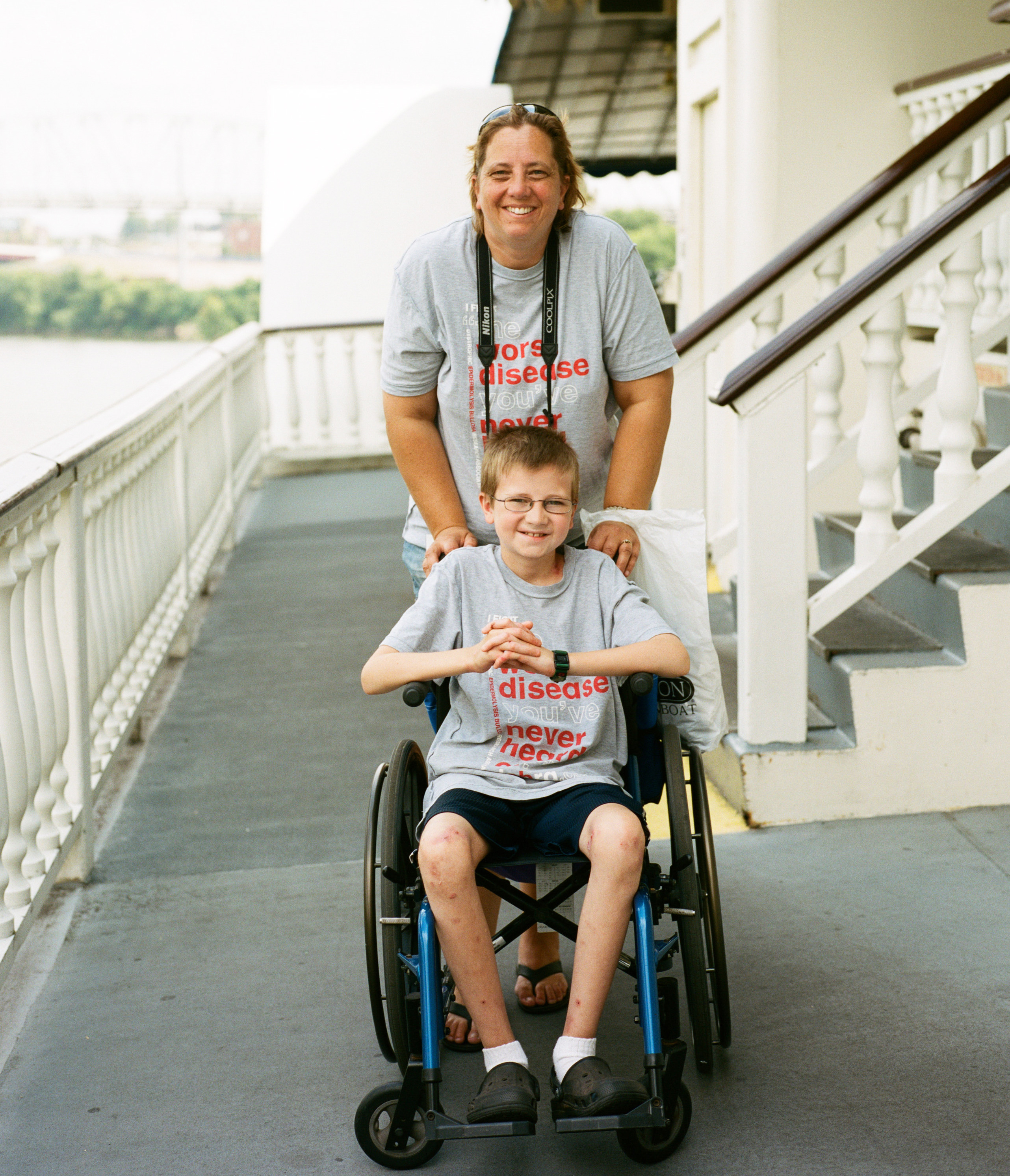 Under current law, airlines are not permitted to charge passengers baggage fees to check in bags that are exclusively packing medical supplies on commercial passenger flights.
To take advantage of this right, airline travelers with Epidermolysis Bullosa (EB) need to make sure to comply with the specific airline carrier's rules and procedures for such baggage. It is a good idea to contact your airline before your flight departure to speak with a representative about their procedures for checking in medical supplies for your trip.
In 1986, Congress passed and the President signed into law the Air Carrier Access Act (ACAA). The ACAA guarantees that people with disabilities receive consistent and nondiscriminatory treatment during air travel and requires air carriers to accommodate the needs of passengers with disabilities. The United States Department of Transportation (USDOT) has published a brief guide to help passengers with developmental disabilities understand their air travel rights. You may access this guide here.
Regarding EB medical supplies and medications, the USDOT has expressed that airlines should not charge fees to travelers packing for "assistive devices" as long as specific medical items are packed in a separate bag with no other non-medical items. If a passenger has assistive devices in a bag which also contains clothes and other non-assistive device items, then the airline may charge the traveler for the bag. Other important considerations include whether the medical items are related to a disability, will the traveler use the items on this particular trip, could the items be purchased at the traveled-to location, and/or are the number of packed medical items in proportion with the time the traveler will be away from their home. For example, if the traveler is packing a year's worth of medical supplies when he or she will only be traveling for a week, the airline is permitted to make a determination that such medical items represent an undue burden and require an associated cost to fly them. The bottom line is that if the medical items are packed exclusively for the particular trip and are of an appropriate quantity that matches the length of the trip, the traveler has a legal right to request the airline to waive the typical baggage fees ordinarily charged for the passenger's air travel.
Other helpful resources for air travel for disabled travelers include questions 44-46 in the USDOT's Frequently Asked Questions, Guidance for Dialysis Machines applicable to other situations, and Air Travel Page.